- Home
- About Us
- Services
- Blog
- Portfolio Pathway (CESR)
- Acute Medicine
- Anesthesiology
- Cardiology
- Cardiothoracic Surgery
- Dermatology
- Emergency Medicine
- ENT (Otorhinolaryngology)
- General Internal Medicine
- General Surgery
- Intensive Care Medicine
- Neurology
- Neurosurgery
- Obstetrics and Gynaecology
- Oncology
- Ophthalmology
- Pathology
- Pediatrics
- Plastic Surgery
- Psychiatry
- Radiology
- Trauma & Orthopedics
- Urology
Portfolio Pathway (CESR) UK support programme for Neurosurgery registration
Tailored Support for Aspiring Consultants
Overview
The Portfolio Pathway (CESR) in Neurosurgery allows surgeons trained outside the UK to achieve GMC specialist registration by demonstrating equivalence to a UK CCT-trained neurosurgeon. This pathway requires strong evidence of operative competence, management of complex neurological conditions, critical care involvement, and multidisciplinary decision-making.
Who is eligible?
– Neurosurgeons with 5–10+ years of surgical training or consultant-level experience
– Independent operative experience in neurosurgery
– Exposure to emergency and elective neurosurgical cases
– Involvement in teaching, audit, and clinical governance
This model is built for every doctor who wants a structured, achievable route to UK Specialist Registration.
What are the testimonials from previous participants?
Success Stories
This was the best course I have ever attended for CESR. Mr. Nanjappa is a genius and a master of his craft. He explained everything in a clear and concise manner, and gave us invaluable tips and tricks. He also provided us with a lot of resources and support. I feel much more confident and motivated after attending his workshop. I highly recommend this course to anyone who is serious about CESR.
“Mr. Nanjappa is an amazing teacher and mentor. He has a wealth of knowledge and experience in CESR, and he shared it with us generously. He was very approachable and friendly, and answered all our questions patiently. He also gave us honest and constructive feedback on our portfolios and interviews. He made the whole process seem easy and fun. I learned a lot from him and I am very grateful for his guidance.”
“I attended Mr. Nanjappa’s workshop after struggling with my CESR application for months. I was feeling lost and frustrated, and I didn’t know where to start or what to do. But after attending his workshop, everything changed. He showed me the right way to approach CESR, and he gave me a clear plan and direction. He also inspired me with his success story and his passion for general surgery. He is a true role model and a leader in his field. I am so glad I joined his programme.”
Evidence Required
Operative Experience:
– Structured logbook of neurosurgical procedures
– Evidence of progression to independent operating
– Core procedures (craniotomy, tumour surgery, trauma, spinal surgery)
Cranial Neurosurgery:
– Brain tumour surgery
– Intracranial hemorrhage management
– Trauma (TBI, decompressive craniectomy)
Spinal Neurosurgery:
– Degenerative spine disease
– Spinal trauma
– Disc surgery and decompression
Neurocritical Care:
– ICU management of neurosurgical patients
– ICP monitoring
– Ventilation and neurological monitoring
Evidence Required
Clinical Practice:
– Outpatient clinics
– Inpatient and perioperative care
– Emergency neurosurgical decision-making
Multidisciplinary Team (MDT):
– Neuro-oncology MDT participation
– Collaboration with neurology, oncology, ICU teams
– Documentation of clinical decisions
Procedural Skills:
– Ventricular drain insertion
– Lumbar drain
– Advanced neurosurgical techniques
Teaching & Training:
– Teaching junior doctors and trainees
– Structured sessions with feedback
Evidence Required
Audit & Quality Improvement:
– Completed audits (cycle preferred)
– Clinical governance and outcomes monitoring
Additional Details
What makes CESR in Neurosurgery challenging?
– High expectations for operative competence and complexity
– Requirement for both cranial and spinal exposure
– Documentation of high-risk decision-making
– Evidence of ICU and MDT involvement
Common reasons applications fail
– Poorly structured operative logbooks
– Limited evidence of independent operating
– Missing neurocritical care documentation
– Weak audit and governance evidence
Approach
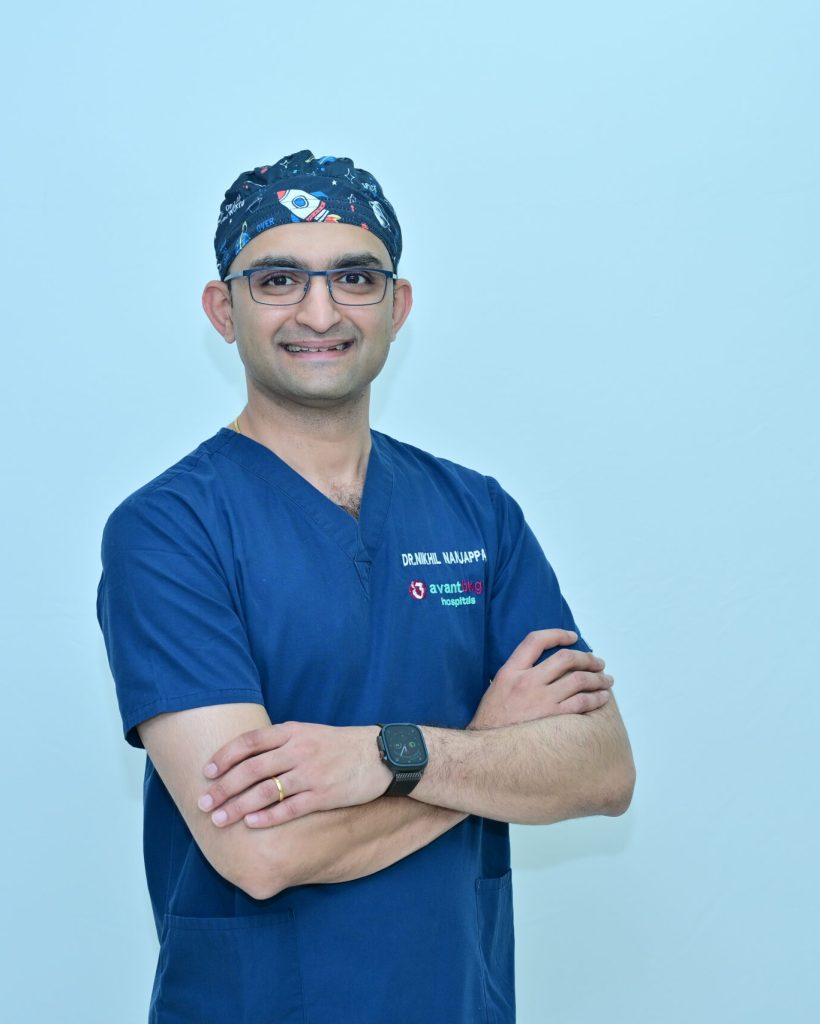
How Dr Nikhil Nanjappa supports you
– Structured portfolio planning aligned with UK neurosurgery standards
– Detailed operative logbook review
– Guidance on documenting complex surgical and ICU cases
– One-to-one mentorship throughout CESR preparation
Timeline
Timeline and strategy
– Initial eligibility assessment
– 3–6 months of structured documentation building
– Final review and submission preparation
Most candidates complete preparation within 6–12 months.
Introducing Your Doctor
About Dr. Nikhil Nanjappa
- Consultant GI & Colorectal Surgeon
- UK-trained; among the youngest to complete FRCS & CESR
- Lead, Department of Gastroenterology & Colorectal Surgery – Avant BKG Hospitals, Mysore
- Founder of the international Portfolio Pathway Support Programme
- Has mentored nearly 100 doctors worldwide
- Deep expertise in curriculum mapping, portfolio structuring & GMC evidence standards
- Known for delivering honest, practical, highly personalised mentorship
Get in Touch
Contact Dr. Nikhil Nanjappa
Call/Mail Us
Connect with Dr. Nikhil Nanjappa on Social Media

Frequently Asked Question's
CESR is a pathway for neurosurgeons to gain UK specialist registration by demonstrating equivalent competencies to UK-trained consultants.
Yes, but your evidence must reflect UK standards of practice.
Yes, exposure to both areas is important.
Yes, neurocritical care is a key component.
Craniotomy, spinal surgery, and emergency neurosurgical procedures are essential.
Yes, audit and quality improvement are essential.
Yes, many applicants prepare their CESR portfolio outside the UK.